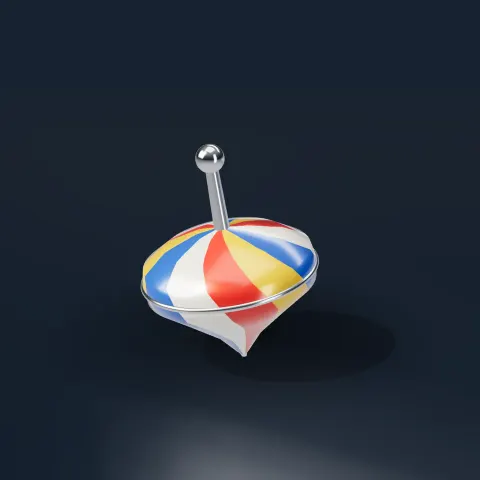
Spinning Top
3D object3DSeamless loop12 seconds
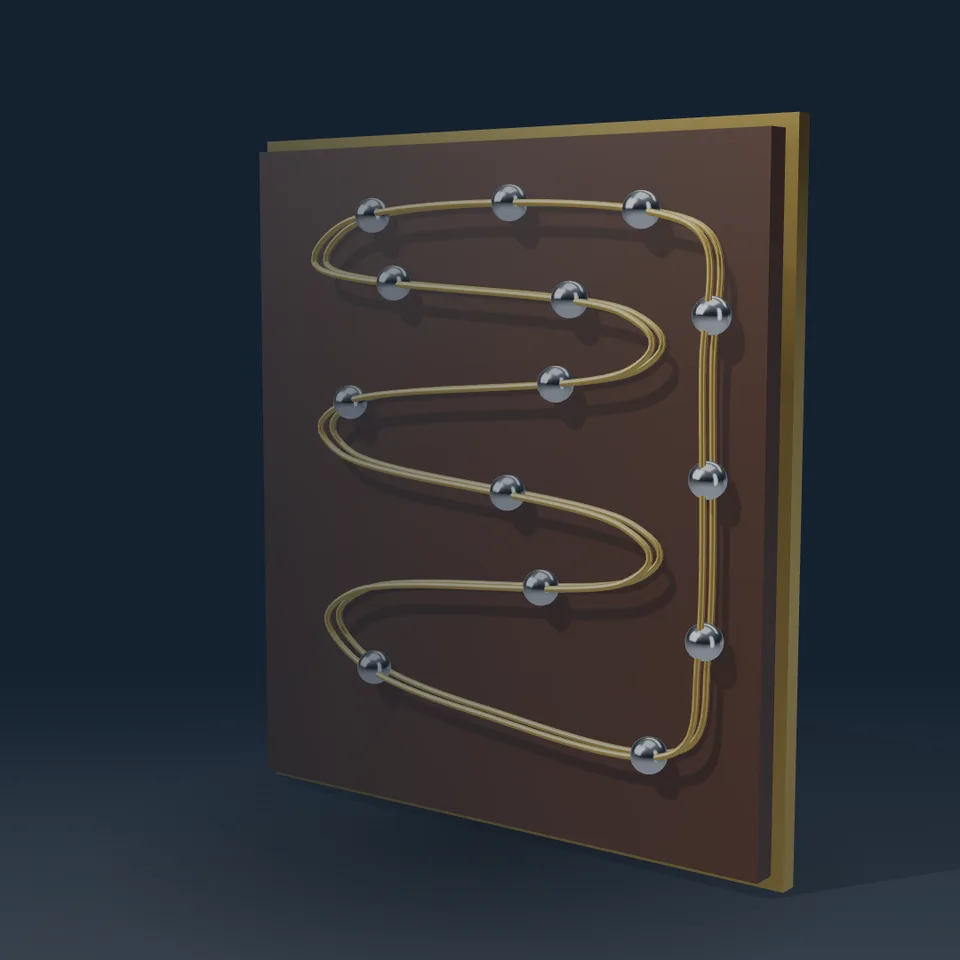
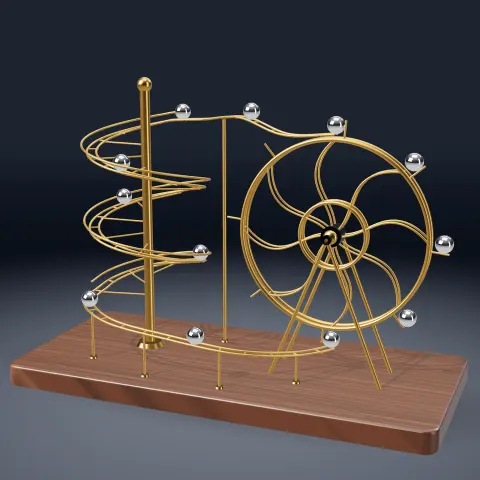
Steel balls roll down twin rails, round the bend and up again. Loops perfectly.
In Machines & clockwork, Toys, games & parties
Next: Spinning TopSurprise me
Your current settings go with it. Combine several clips and hand them over together from your sequence.
Presets
Whole laps of the track each ball makes per loop.
The preview runs the same code your AI receives. These settings travel with the hand-off.
A kinetic desk toy on a wooden board: steel balls roll one after another down a zig-zag of twin brass rails, gathering speed as they fall, drop round the bottom bend and are carried up the side to start again. The balls are spaced evenly round the closed track, so there is always a ball in every part of it. Choose the number of balls, the finish (steel, brass, copper, black), the board (walnut, oak, slate, white), how many laps a loop holds, the backdrop and whether the camera drifts.
src/ball-clock.js is the ingredient your AI reuses. demo.js is only the example scene around it, and uses chrome-material only for the demo.
src/ball-clock.jscreateBallClock({ balls?, metal?, board?, laps? }) => { group, setProgress(progress), dispose() }METALS: { steel, brass, copper, black }three@0.185.1 (source) — Renderer, geometry and physical materials.chrome-material@1.1.0 (demo) — Studio environment light, backdrop and contact shadow.apw-runtime@1.0.0 (demo) — Demo harness.Coordinates: The board is 9.4 × 10.4 in the xy plane facing +z, the track a closed spline inside it, .
Lighting: A key light with a shadow map and the studio environment on the polished balls and brass rails.
Timing: setProgress(progress) places every ball by table lookup; frames render in any order.
npm install
npm run render -- ball-clock/1.0.0 --out my-video.mp4
Needs Node 18+, ffmpeg and Chrome/Chromium. Add --params my-settings.json (from Copy settings) for your own settings.sha256:bc36459fdcea3d41… · other versions: 1.0.13D object3DSeamless loop12 seconds
3D object3DSeamless loop16 seconds
3D object3DSeamless loop9.6 seconds
3D object3DSeamless loop12 seconds
3D object3DSeamless loop12 seconds
3D object3DSeamless loop12 seconds
3D object3DSeamless loop16 seconds
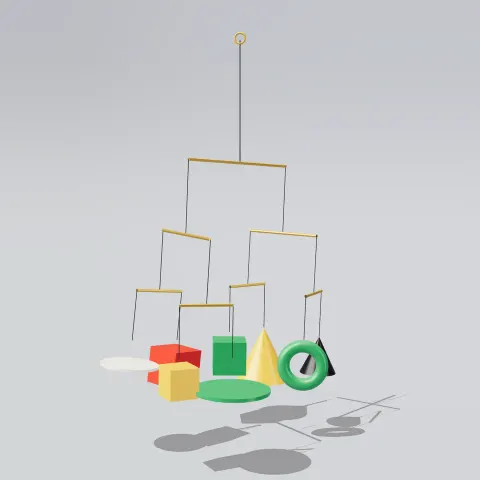
3D object3DSeamless loop20 seconds