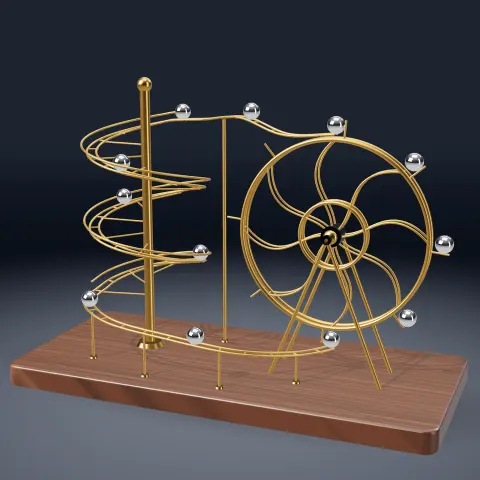
Rolling-Ball Sculpture
3D object3DSeamless loop12 seconds
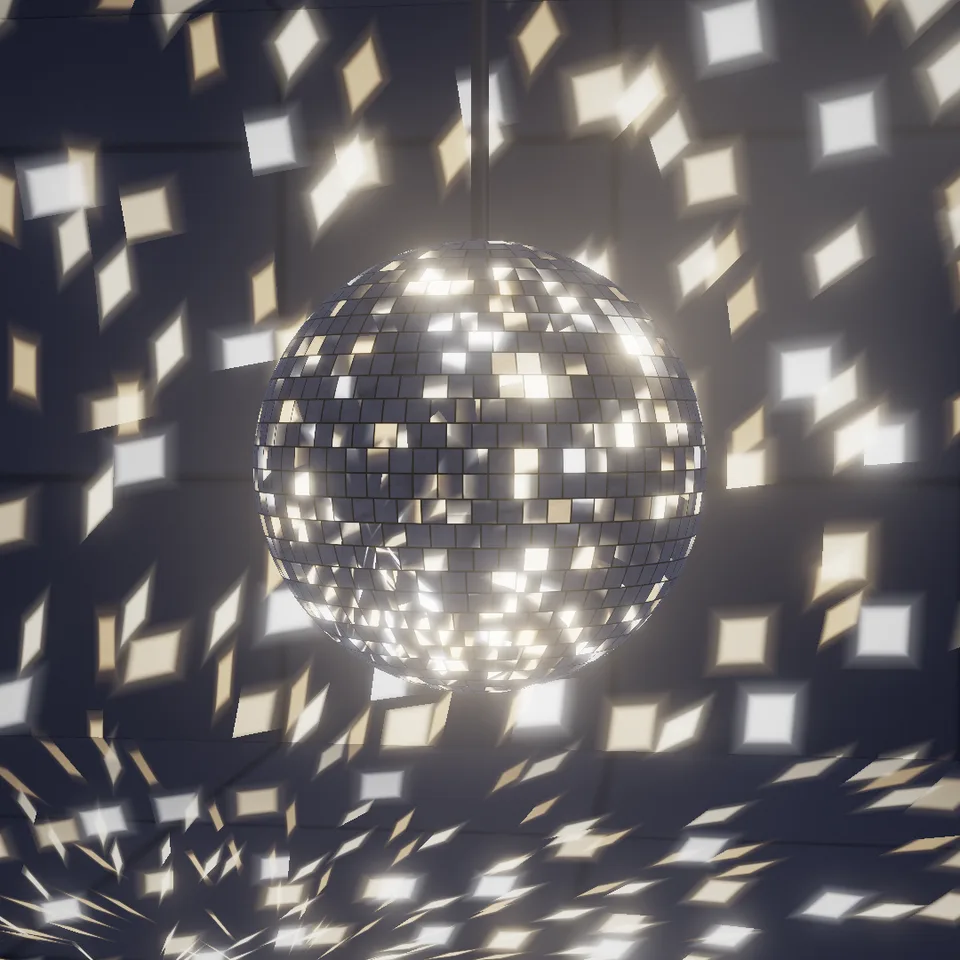
A mirror ball turning in a dark room, throwing hundreds of coloured squares of light across the walls and floor. Loops perfectly.
In Light, glass & shine, Toys, games & parties, Craft & heritage
Your current settings go with it. Combine several clips and hand them over together from your sequence.
Presets
More rows mean smaller tiles and more, smaller dots.
The preview runs the same code your AI receives. These settings travel with the hand-off.
A mirror ball made of hundreds of tiny tilted tiles turning in a dark room, lit by coloured spotlights that circle above it. Every tile flashes as it turns past a light and shows a miniature of the room in its mirror; every tile throws its own square of light across the walls, floor and ceiling, so the room fills with moving dots; the beams of the lights show in a haze. Choose the colour of the lights (warm white, rainbow, blue and violet, or gold), the number of rows of tiles, how many spotlights, the haze, how many turns the ball makes in a loop, the brightness, the sparkle of the tiles and how far the camera sways.
src/disco-ball.js is the ingredient your AI reuses. demo.js is only the example scene around it, and uses the demo harness only for the demo.
src/disco-ball.jscreateDiscoBall({ palette?, rows?, spots?, haze?, turns?, brightness?, sparkle?, sway?, seed? }) => { scene, camera, material, setSize(width, height), update(time, loopSeconds), dispose() }createBloomPass(renderer, { width, height, glow?, exposure?, grain? }) => { render(scene, camera, output?), dispose() }PALETTES: { classic, rainbow, blue, gold }three@0.185.1 (source) — Renderer and the full-screen shader.apw-runtime@1.0.0 (demo) — Demo harness.Coordinates: World units of about a metre: the ball (radius 0.5) hangs at the origin of a box room 8.4 wide, 4.4 tall and 10.5 deep; the camera is 3.6 away.
Lighting: The spotlights circle at height 2.45; each tile reflects them: the light dots on the walls are solved in closed form from the half-way vector between the light and the point, seen from the ball.
Timing: update(time, loopSeconds) sets the loop phase and the ball's angle; frames render in any order.
npm install
npm run render -- disco-ball/1.0.0 --out my-video.mp4
Needs Node 18+, ffmpeg and Chrome/Chromium. Add --params my-settings.json (from Copy settings) for your own settings.sha256:1629195265ea42e5…3D object3DSeamless loop12 seconds
Background3DSeamless loop12 seconds
Background3DSeamless loop8 seconds
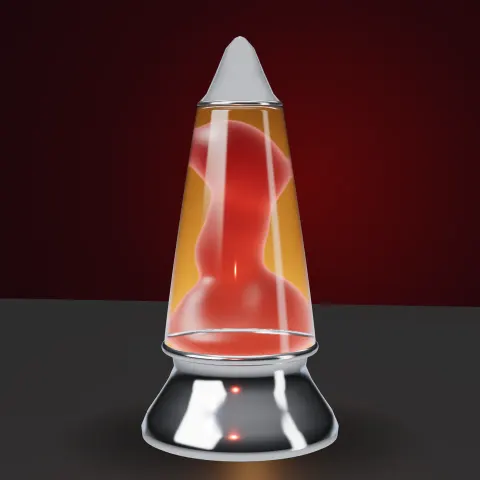
3D object3DSeamless loop15 seconds
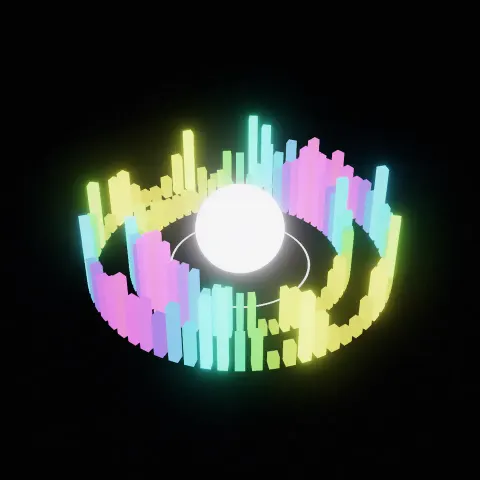
3D object3DSeamless loop16 seconds
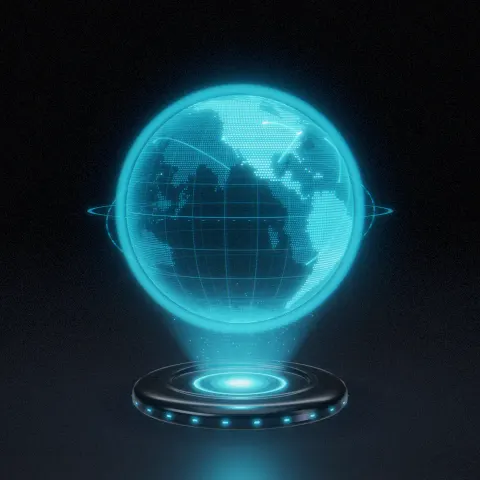
3D object3DSeamless loop12 seconds
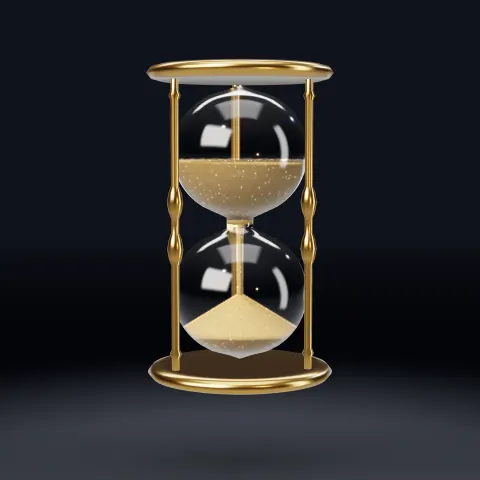
3D object3DSeamless loop16 seconds
3D object3DSeamless loop9.6 seconds